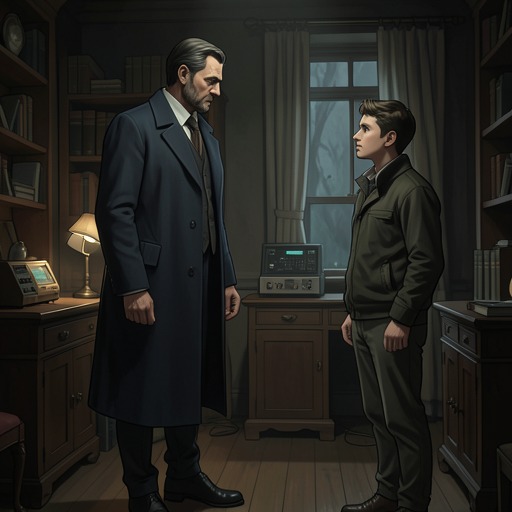
“Fear the love of woman; fear that bliss, that poison”
First LoveThe warning “fear the love of woman; fear that bliss, that poison” is Piotr Vassilievitch’s last message to his son, written in French on the morning he suffered the stroke that killed him. It stands at the end of a pattern of paternal advice about will and independence, but gives that confidence a darker counterpart: love can bring both happiness and danger. Vladimir Petrovitch remembers the words alongside the revelation of his father’s relationship with Zinaïda Alexandrovna Zasyekin, which had already unsettled his ideas about love and self-command.
Earlier Counsel on Will
Piotr’s advice to his son had earlier centered on self-possession. He told Vladimir to take what he could and not be ruled by others, describing the taste of life as belonging to oneself. When Vladimir, then a young democrat, spoke about liberty, his father redirected the discussion to will: knowing how to will, he said, made a person free and gave that person power to lead. The advice was less an abstract argument than a glimpse of the authority Piotr valued: not simply freedom from restraint, but the capacity to direct oneself.
That teaching came within a strained father-son relationship. Piotr took little interest in Vladimir’s education and kept him at a distance, even though he treated him courteously and sometimes, unexpectedly, invited his confidence. His rare moments of warmth could vanish as abruptly as they appeared. Vladimir later concluded that his father’s attention and emotional life were invested elsewhere, a judgment that the final warning makes newly charged without explaining everything Piotr had kept private.
The Letter and Its Circumstances
The warning came near the close of Piotr’s life. Two months after the encounter that transformed Vladimir’s understanding of his father and Zinaïda, Vladimir entered university. Within six months Piotr died of a stroke in Petersburg, where he had recently moved with Vladimir and his mother. A few days before his death, a letter from Moscow had thrown Piotr into violent agitation. He went to Vladimir’s mother to ask a favor and, according to what Vladimir was told, even shed tears—an extraordinary departure from the son’s image of his reserved father.
On the morning of the stroke, Piotr began a letter in French to Vladimir. Its warning against women’s love, and its pairing of bliss with poison, is the surviving substance of a final paternal message. The timing links the admonition to the upheaval of Piotr’s last days, but the account does not identify the favor he sought or establish what the Moscow letter said. The warning therefore remains pointed yet unexplained: a last counsel shaped by experience that Piotr does not disclose to his son.
Meaning in Vladimir’s Recollection
Vladimir’s understanding of the warning is formed by what he has seen. Before his father’s death, he witnessed Piotr strike Zinaïda and saw her respond with a quiet, submissive gesture. The scene shattered his expectation that love must produce revolt. That night he reflected that even a blow from a beloved person could be borne by someone who loved, and recognized that his own youthful passion seemed small beside the force of what he had witnessed. The final advice thus reaches a son who has already encountered love as both devotion and pain, though he cannot fully comprehend what he has seen.
The warning also complicates Piotr’s earlier ideal of self-rule. The father who had taught that a person should not be governed by others now cautions his son against a passion that may place the lover in the power of another. Yet Vladimir’s recollection does not reduce the phrase to a simple rejection of love: he has just described the devotion and sorrow he witnessed, and his father’s rare tenderness and pity remain part of the same remembered portrait. The words endure as a compressed contradiction—love’s bliss can be inseparable from its danger—and as the final, incomplete measure of what Piotr chose to pass on.